07557 943 820 · Monday to Saturday, 9am to 6pmhello@essexdogtrainer.co.uk · Where we are
Essex Dog Trainer Book now

Dog behaviourist · Puppy problems

Puppy behaviour problems, Essex

If the biting, crying and jumping get worse each week, now is the easiest time to change them.

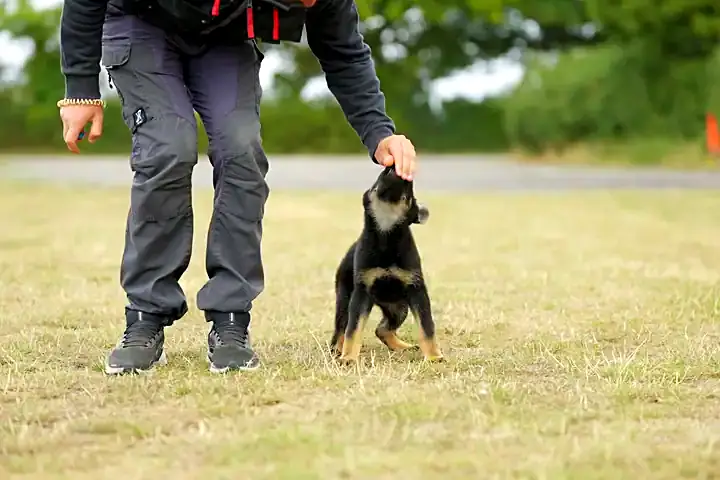
German Shepherd puppy sitting and looking up at its handler for a treat

5.0 on Google from 250+ reviews

Get help with my dog

Sound familiar?

  • They bite hands, feet and clothes, and it's getting harder, not softer.
  • They cry, howl or chew when left, even for a few minutes.
  • Toilet training has stalled, or they go inside straight after being outside.
  • They jump up, pull on the lead or won't come back when called.

What changes

Your puppy learns what to do instead of biting, crying and jumping, and you learn how to keep it going at home. The habits are sorted now, while they are easy to change, not lived with in an adult dog.

How Alex fixes it

  1. AssessmentA 1.5-hour session at our secure Chelmsford field (or at your home, extra). We watch what your dog does, when and why.
  2. A plain explanationWhat is driving the behaviour and what will change it, in plain English, with no jargon.
  3. Practise togetherYou do it with your own dog there and then, with Alex coaching, until it works for you and not just for him.
  4. Follow-ups when you need them£100 an hour at the field, £120 at home, or where the problem really happens, such as your street, the park or your home.
Rottweiler · Puppy

“Our Rottweiler puppy is living/being cared for in two households, mine and my brother's. Puppy was showing behaviours with me that he wasn't doing with my brother e.g. walking in front, nipping at me, jumping up. …”

Read the full review

“Our Rottweiler puppy is living/being cared for in two households, mine and my brother's. Puppy was showing behaviours with me that he wasn't doing with my brother e.g. walking in front, nipping at me, jumping up. Alex has accommodated the training to ensure I am developing confidence in the management of our puppy's undesirable behaviours, after a couple of sessions, lead walking/control, done. Alex's style of training and support is top notch and invaluable.”

Alka A. · Google review

What it costs

First 1.5-hour session at our Chelmsford field
£160
Home visits
£190
Follow-up sessions
£100 an hour (£120 at home)
Residential training, if it suits your dogNew dogs stay a minimum of three weeks; for puppies and behaviour problems we suggest four. Dogs who have trained with us before can book shorter stays, for example while you are away.
£850p/w

See all prices

  • You deal with Alex directly, from first message to the last session
  • Master Dog Trainer, Guild of Dog Trainers

Tell Alex about your puppy

We reply Monday to Saturday, usually within the hour, by email.

Please choose what your dog is doing.

Please tell us your name.

Please add your town, postcode or country.

We reply by email. Never shared.

Please add your email address so we can reply.

We reply Monday to Saturday, usually within the hour, by email.

Prefer to talk? Phone 07557 943 820 · Only used to reply to you: privacy

Sources
  1. Blue Cross, Puppy biting and mouthing
  2. Blue Cross, Socialising your puppy
  3. Blue Cross, Toilet training a puppy

More about puppy problems

Biting and chewing. Puppies explore with their mouths, and teething makes it worse. Blue Cross says most grow out of mouthing between three and five months, when they're shown what they can bite instead.

Crying when alone. Most have never been alone before they come home. Being left needs to be taught in small steps.

Fear. The main socialisation window is early, between 3 and 12 weeks according to Blue Cross. Missing calm, positive experiences in that time can make the world feel worrying later.

Guarding. Guarding chews or food can start early. It usually starts small and is much easier to change now than in an adult dog.

Tiredness. Overtired youngsters bite more, listen less and find it harder to settle. Sleep is part of training.

  • Redirect biting onto a toy and keep your hands calm and still. Don't squeal or scold.
  • Allow plenty of sleep and a quiet bed spot that's theirs.
  • Take them out to toilet after waking, eating and playing, and praise them when they go.
  • Practise short spells alone, a few minutes at a time, with a chew.
  • Don't take things off a youngster who's guarding. Swap for a treat instead, and let them eat in peace.
  • Keep new experiences short and calm, and let them approach in their own time.

Our full guide, how to raise the perfect puppy, sets out a training plan for the whole first year.

1. A puppy session. For biting, toilet training, crying at night, settling and the first skills, the first 1.5-hour session (£160 at our Chelmsford field, or £190 at your home) is usually enough to start, and follow-ups (£100 an hour at the field, £120 at home) are added only if you want them. One-to-one sessions.

2. A 1-2-1 behaviour session. For guarding, fear that's growing, or biting that's getting harder rather than softer, we start with 1.5 hours to get to the bottom of it: £160 at our Chelmsford field, or £190 at your home. More about behaviour help.

3. Theory and practice together. Understanding why a young dog behaves the way they do is only half the job. The other half is the practical skill to change it, calmly, in front of you. We bring both, so you get advice that makes sense and works at home.

For everyday puppy training and obedience, see our 1-2-1 puppy training.

Puppy behaviour FAQs

What does it cost?

£160 for the first 1.5-hour session at our Chelmsford field (£190 at your home), then £100 an hour for follow-ups at the field (£120 at home). You only book follow-ups when you need them, and every price is on our prices page before you start.

Will it last once we're home?

That is what the sessions are built for. You practise with your own dog until it works for you, not just for Alex, and follow-ups (£100 an hour at the field, £120 at home) can happen where the problem really happens: your street, the park or your home.

Is the training kind?

Yes. Training is done calmly, because frustration, anger and harsh methods only slow progress. We never punish a growl or fear, we explain everything we do and why, and you see exactly what we're doing. Alex is a Master Dog Trainer with the Guild of Dog Trainers.

Why not just do it myself with videos?

You can, and our guides are there to help. Where owners get stuck is timing and reading their own dog. In a session you practise with your dog while Alex coaches, so you see what works for your dog, not a dog in a video. Alex has worked with more than 10,000 dogs in over 15 years.

Is it too late to change these habits?

No. Puppy training starts from 8 weeks, but older puppies and teenage dogs learn too. The sooner a habit is changed, the easier it is, which is why we suggest starting now rather than waiting for your puppy to grow out of it.

When should I get help with my puppy?

As soon as something worries you. Habits are far easier to change early, especially biting that's getting harder, guarding, panic when left, or fear that's growing.

Is puppy biting normal?

Yes. Puppies explore with their mouths and most grow out of it between three and five months, with the right help. If it's getting harder, or happens when your puppy is calm, get help.

My puppy growls over chews. Should I worry?

It's worth acting early. Don't take things off them. Swap instead, and let them eat or chew in peace. If it's growing, get help now, while it's easier to change.

From the blog

  • How to stop puppy biting

    How to stop puppy biting: why puppies bite hands, ankles and sleeves, what makes it worse, and the routine that stops it in a few weeks. Read on.

  • How to raise the perfect puppy

    How to raise the perfect puppy: a practical first-year training plan covering socialisation, biting, toilet training, settling and recall. Read the plan.

Get help

Tell Alex what your dog is doing

A few lines is enough. We reply Monday to Saturday, usually within the hour.

Get help with my dog