07557 943 820 · Monday to Saturday, 9am to 6pmhello@essexdogtrainer.co.uk · Where we are
Essex Dog Trainer Book now

Dog behaviourist · Separation anxiety

Separation anxiety help in Essex

If you dread leaving the house because of what your dog does when you've gone, being left can become safe for your dog.

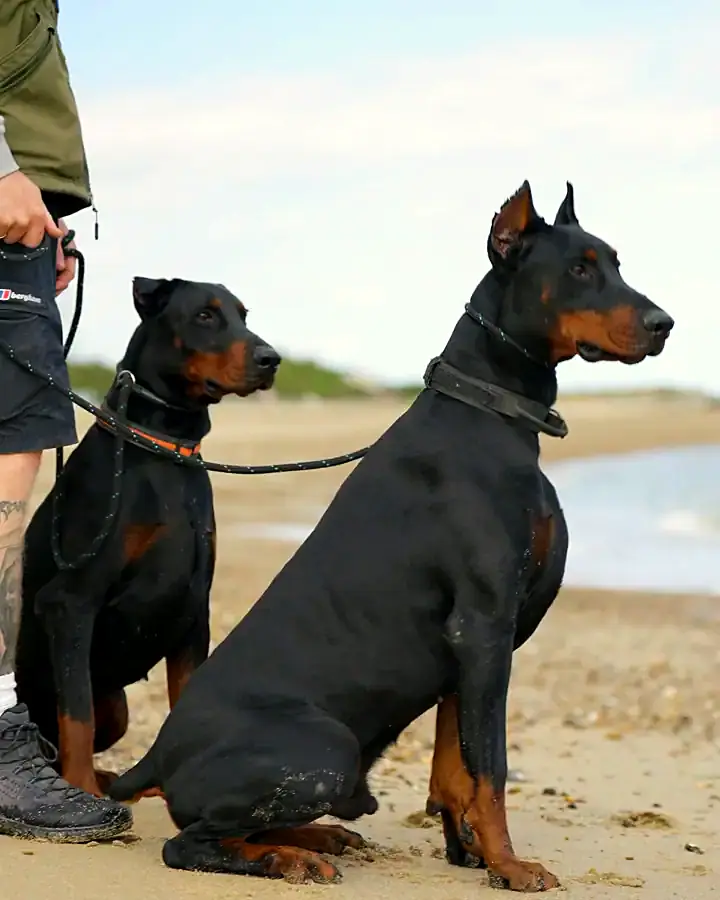
Dobermann sitting on the beach beside another dog

5.0 on Google from 250+ reviews

Get help with my dog

Sound familiar?

  • They howl, bark or whine when you leave, sometimes the whole time you're out.
  • They chew doors, scratch at frames or have accidents, but only when alone.
  • They follow you from room to room and get worried when you pick up your keys.
  • You haven't been out as a family for months without paying a dog sitter.

What changes

Your dog learns that being left is safe, a few minutes at a time and at a pace it can cope with. Over time you can go to work, the shops or out for the evening without dreading what you will come back to.

How Alex fixes it

  1. AssessmentA 1.5-hour session at our secure Chelmsford field (or at your home, extra). We watch what your dog does, when and why.
  2. A plain explanationWhat is driving the behaviour and what will change it, in plain English, with no jargon.
  3. Practise togetherYou do it with your own dog there and then, with Alex coaching, until it works for you and not just for him.
  4. Follow-ups when you need them£100 an hour at the field, £120 at home, or where the problem really happens, such as your street, the park or your home.
Poodle cross · Behaviour

“The Best decision I’ve ever made to help my dog with separation anxiety. And it’s partly thanks to the people on here, sparing their time to write a review,so I wanted to do the same. …”

Read the full review

“The Best decision I’ve ever made to help my dog with separation anxiety.
And it’s partly thanks to the people on here, sparing their time to write a review,so I wanted to do the same.
I wish I did this sooner as I tried everything to help my cockapoo who is 2 years & 4 months old with his separation anxiety issues.
From research,books,tv,asking people who have dogs and I even hired someone else which unfortunately (not checking reviews) wasn’t good.
I’m so glad i decided to try again and ask a professional for help.
Alex is no less than amazing,I really didn’t think he’ll be able to solve the problem.
Not only did he solve the problem,but I saw results so quickly.
He’s like the Dr.Dolittle of the dog world.I would 100% recommend Alex to help anyone with their dog issues.”

Sharon T. · Google review

What it costs

First 1.5-hour session at our Chelmsford field
£160
Home visits
£190
Follow-up sessions
£100 an hour (£120 at home)
Residential training, if it suits your dogNew dogs stay a minimum of three weeks; for puppies and behaviour problems we suggest four. Dogs who have trained with us before can book shorter stays, for example while you are away.
£850p/w

See all prices

  • You deal with Alex directly, from first message to the last session
  • Master Dog Trainer, Guild of Dog Trainers

Tell Alex about your dog being left

We reply Monday to Saturday, usually within the hour, by email.

Please choose what your dog is doing.

Please tell us your name.

Please add your town, postcode or country.

We reply by email. Never shared.

Please add your email address so we can reply.

We reply Monday to Saturday, usually within the hour, by email.

Prefer to talk? Phone 07557 943 820 · Only used to reply to you: privacy

More about separation anxiety

"Separation anxiety" gets used for several different problems, and the right help depends on which one your dog has.

Panic about being alone. Some dogs are frightened of being on their own, whoever is or isn't there.

Panic about one person leaving. Some dogs cope with anyone at home, and fall apart when one particular person goes out.

Boredom or frustration. Some dogs who chew or bark when left aren't anxious at all. They need more to do, or they're frustrated by being shut away from something.

Fear of something that happens while you're out. Noises, deliveries or people passing the window can frighten a dog who's alone. If noises are the trigger, see our page on dogs who are frightened of noises.

Health. Accidents, restlessness or new behaviour in an older dog can have a medical cause. If it started suddenly, see your vet as well.

Big changes. A move, a new baby, a new job or a change of routine can all set it off.

  • Try not to leave your dog for longer than they can cope with while we work on it. Friends, family, a dog sitter or a day at our Big Dog Club day training, once Alex has assessed your dog, can help bridge the gap.
  • Film your dog when you go out. A phone or cheap camera shows what's really happening, and it's very useful at the first session.
  • Keep comings and goings calm. No big goodbyes or over-the-top hellos.
  • Don't shut a panicking dog in a crate. A dog who is frightened when alone can hurt themselves trying to get out.
  • Give a long-lasting chew or lick mat if your dog will take food while you're away. If they won't eat, that's useful information too.
  • Speak to your vet if your dog is in real distress. Some dogs need medical help alongside training.

1. A 1-2-1 behaviour session. For separation anxiety we usually suggest we meet at your home, because that's where your dog is left. We can also meet at our training field at Roxwell if that's easier. It lasts 1.5 hours and costs £160 at our Chelmsford field, or £190 at your home. We talk through your dog's history, health and day, look at any footage you have, and work out what kind of problem it really is. Then we agree first steps, and we show you how to do them. Book a 1-2-1 behaviour session.

2. Small, steady steps. Most of this work happens at home with you. We build up time alone very gradually, staying below the point where your dog starts to worry. Follow-up sessions at £100 an hour at the training field, £120 an hour at home help us adjust as your dog improves.

3. Residential, for some dogs. If your dog comes for residential training, short, gentle spells of time alone can be part of their daily training. It's one part of the picture, and the work has to carry on at home. We'll tell you honestly whether residential makes sense for your dog.

Separation anxiety FAQs

What does it cost?

£160 for the first 1.5-hour session at our Chelmsford field (£190 at your home), then £100 an hour for follow-ups at the field (£120 at home). You only book follow-ups when you need them, and every price is on our prices page before you start.

Will it last once we're home?

That is what the sessions are built for. You practise with your own dog until it works for you, not just for Alex, and follow-ups (£100 an hour at the field, £120 at home) can happen where the problem really happens: your street, the park or your home.

Is the training kind?

Yes. Training is done calmly, because frustration, anger and harsh methods only slow progress. We never punish a growl or fear, we explain everything we do and why, and you see exactly what we're doing. Alex is a Master Dog Trainer with the Guild of Dog Trainers.

Why not just do it myself with videos?

You can, and our guides are there to help. Where owners get stuck is timing and reading their own dog. In a session you practise with your dog while Alex coaches, so you see what works for your dog, not a dog in a video. Alex has worked with more than 10,000 dogs in over 15 years.

Can separation anxiety be cured?

Many dogs learn to cope much better when left. How far your dog can go depends on the cause and how long it's been going on. We won't promise a timescale before we've met them, and this work usually goes in small steps.

How long will it take?

It varies a lot from dog to dog. It depends on what kind of problem it is, how long it's been going on, and how often your dog has to be left before they're ready.

Will getting another dog help?

Sometimes, but often not. Many dogs with separation anxiety are worried about being without a particular person, and another dog doesn't fix that. Talk to us before you get a second dog.

Should I crate my dog when I go out?

Not if your dog panics when left. A frightened dog can hurt themselves trying to escape a crate. Some dogs do feel safe in a crate, and we can work out which kind of dog yours is.

From the blog

Get help

Tell Alex what your dog is doing

A few lines is enough. We reply Monday to Saturday, usually within the hour.

Get help with my dog