
In a hurry?
- Choose a dog for the life you really live.
- Look at what the breed or type was bred to do. That job still shows up at home.
- Think about time, exercise, training, grooming, cost and who's at home all day.
- Meet the puppy with its mother, where it was born. Walk away from anyone who won't answer questions.
Alex can help with this: The trainer.
Want Alex to look at your dog?
Four quick questions. We reply Monday to Saturday, usually within the hour.
Thanks, .
We reply Monday to Saturday, usually within the hour, by email from hello@essexdogtrainer.co.uk.
Can't see our reply? Check your junk or spam folder, and mark it "not junk" so you get the rest of our emails.
What happens next:
- Alex asks a few questions about your dog.
- He tells you which option fits and what it costs.
- You pick a date if you want one.
Nothing by the next working day? Email hello@essexdogtrainer.co.uk.
Preview only: this copy of the site is not connected to the enquiry inbox, so nothing was sent.
In October 2025 I went on the BBC Essex Breakfast Show to talk about choosing the right dog. I said, "Some people are getting the dogs they want, not the dogs they need." A mismatch between a dog and a family is often nobody's fault. People choose with their heart, and nobody tells them what to ask. This guide sets out the questions to ask first.
The dog you want, or the dog you need?
Most of us start with looks. A fluffy coat, a breed we grew up with, a dog we saw online. Woodgreen Pets Charity advises, "Try not to choose on looks alone, this is a small part of what makes a dog." I see this often. Working breeds, like German Shepherds, Spaniels and Collies, can be wonderful family dogs. But they come with energy and drive that need a daily outlet, and a lively puppy can be much harder work than a family expected. That doesn't make them bad dogs. It means they need the right home, and the right help early on. With good help, it can go really well. David H. wrote about his German Shepherd puppy: "It's literally changed our lives."
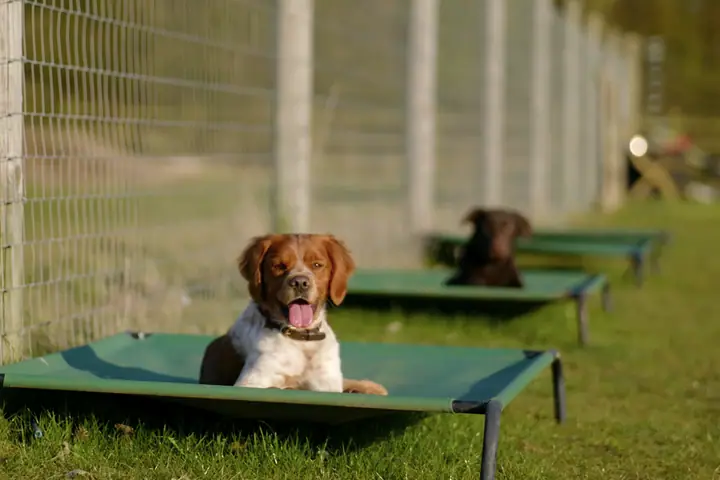
What was the dog bred to do?
Breeds were developed for jobs, and that history still shapes how they behave on your sofa. Woodgreen notes that gundogs may want to hold things in their mouths, and herding dogs may want to chase moving things. At home, that can mean children, bikes or the cat. Ask yourself:
- Herding breeds (like Border Collies) are often clever and busy, and need plenty to do. Will they get it?
- Working and guarding breeds (like German Shepherds) can be loyal and protective. Can you give the training and structure they need?
- Terriers were bred to dig and chase. How will that fit with your garden and your cat?
- Gundogs (like spaniels and retrievers) often love to sniff, carry and work. Will they get those outlets?
- Flat-faced breeds can have serious breathing and health problems. The British Veterinary Association says, "Flat-faced dogs can suffer from a range of serious health and welfare issues." Look into this carefully before you choose one.
Crossbreeds and rescue dogs can be wonderful too. With a cross, think about the jobs of both parent breeds.
Be honest about your life
Write down your straight answers to these.
- Time. How many hours a day will the dog be alone? Most UK charities say no more than about four hours for an adult dog, and far less for a puppy.
- Exercise. How much walking will really happen in January rain?
- Training. Who will do it, and when? Every day, for months?
- Children. How old are they, and who will supervise every moment they're together?
- Other pets. Is there a cat, or another dog, to think about?
- Home. Garden, stairs, flat, a busy road?
- Grooming and cost. Some coats need regular professional grooming. Insurance, food, vet bills and boarding all add up.
- Experience. Is this your first dog?
The PDSA found in 2016 that around a quarter of pet owners had got their pet without doing any research first. The same report found that two-thirds of dog owners said their dog had at least one behaviour they'd like to change.
choosing a puppy safely
In England, Lucy's Law has banned commercial third-party sales of puppies since 6 April 2020. You must buy directly from the breeder or adopt from a rescue centre. The UK government's advice includes these warning signs:
- the seller has lots of litters of different breeds
- the same phone number appears in many adverts
- the puppy is under 8 weeks old
- you can't see the puppy with its mother where it was born
The British Veterinary Association, Animal Welfare Foundation and RSPCA recommend The Puppy Contract, a no-cost guide to the questions to ask. Ask how the puppies have been raised and socialised, what health tests the parents have had, and about vaccinations and microchipping. As the BVA puts it, "If a seller is not willing to provide answers to your questions, then you should walk away" to avoid a puppy that might have a poor quality of life.
A puppy at Christmas?
Dogs Trust's famous line, "A dog is for life, not just for Christmas", was first used in 1978. It still matters. Christmas is busy, noisy and full of visitors. That's hard on a new puppy who needs calm, sleep and a steady routine. If you've chosen well and want a puppy, it may be kinder to bring them home once the house is quiet again. Also think ahead. A puppy who arrives at Christmas will be heading into adolescence by spring or early summer. Research from the Universities of Nottingham and Newcastle found that obedience dips at around 8 months, and that adolescence is the peak age for dogs being given up to rescue centres. Plan for that stage now.
On BBC Essex I also said, "People have this misconception that a few puppy sessions or six training classes are enough." puppy sessions are great. Go to them. But a dog's learning carries on through adolescence and beyond. Budget time, and possibly money, for training through at least the first two years. For everyday puppy and obedience training, I run Essex Dog Trainer. If something does go wrong, it isn't the end. Most problems are easier to change when you get help early, while habits are still forming.
In more than 15 years I've worked with over 10,000 dogs, including dogs other trainers turned away. Some behaviour problems are much easier to prevent than to fix. A good match from the start gives your dog, and your family, the best chance. If you'd like to talk through a decision, or you already have a dog who is struggling, a 1-2-1 behaviour session lasts 1.5 hours and costs £160 at our Chelmsford field, or £190 at your home. See all prices or read more about me.
Questions owners ask
How do I choose the right dog for my family?
Start with your real routine, then look at what each breed or type was bred to do. Think about time alone, exercise, training, children, other pets and cost. Meet the puppy with its mother, and walk away from any seller who won't answer questions.
Is it a good idea to get a puppy at Christmas?
It's often better to wait until the house is calm again. Christmas is noisy and busy, and new puppies need sleep and routine. Remember that a Christmas puppy will be a teenager by spring or early summer.
What's the best dog for a first-time owner?
There's no single best breed. Look for a dog whose energy and needs match your life, and avoid choosing on looks alone. A calm adult rescue dog can be a good choice for some first-time owners.
Should I get a puppy or an older dog?
A puppy needs lots of time for toilet training, socialising and training through adolescence. An adult dog's personality is easier to see. Both can be right, depending on your family.
What should I ask a breeder?
Ask how the puppies were raised and socialised, what health tests the parents have had, and about vaccinations and microchipping. Ask to see the puppy with its mother where it was born. The Puppy Contract lists the key questions.
Are puppy sessions enough?
They're a great start, but training carries on through adolescence and beyond. Plan for ongoing practice through at least the first two years.
Google review
“We've used Alex a number of times over the course of the last 8/9 months. Prior to this we were at our wits end with our new german shepherd puppy - Rafa. …”
Read the full review
“We've used Alex a number of times over the course of the last 8/9 months. Prior to this we were at our wits end with our new german shepherd puppy - Rafa. He was never aggressive, but a nightmare to walk, seemingly unable to relax, reactive to pretty much everything. Generally just exhausting to live with. We were close to giving him up for adoption but couldn't go through with it. I'm so, so happy we didn't.
Over the course of our sessions with Alex we've seen a huge difference in Rafa's temperament and all of the areas we were struggling with. He's still full of energy and life but we're much better trained ourselves to direct that and Rafa is much more engaged with us - wanting to focus on us and what we want him to do. It's literally changed our lives.
Both my partner and I can't speak highly enough of Alex and the sessions we've had. We'd used, or tried to use, a couple of other trainers in the Chelmsford area and were either given bog-standard advice you can find on the internet, or people unwilling to work around/with the covid restrictions at the time. Alex has accomodated us at home and outside, working on all areas of obedience and maturity with Rafa. Most importantly my partner and I got the training we've needed in order to handle and care for an extremely lively dog!
As above - I can't recommend Alex enough, great value for money, timely/responsive and so relaxed & in control. Worth your time and money without a doubt.”
Sources
- BBC Essex Breakfast Show, 14 October 2025
- K9 Generation, "Choosing the right dog" (BBC Essex interview write-up)
- Reviews: Google review, David H.
- Woodgreen Pets Charity, How to choose the right dog breed for your lifestyle and home
- BVA, Breed to Breathe campaign
- BVA, Top questions puppy buyers should ask breeders (The Puppy Contract)
- GOV.UK, Chief Veterinary Officer's Christmas puppy-buying advice and Lucy's Law (13 November 2020)
- PDSA, "Pets' welfare at risk as one-in-four pet owners do no pre-purchase research" (PAW Report 2016)
- The Drum, Dogs Trust slogan at 35 years (2013)
- Asher L. et al. (2020), "Teenage dogs?", Biology Letters 16:20200097 (Newcastle University summary)
- Blue Cross, Adolescence in dogs
- Dogs Trust, Separation anxiety in dogs (time alone guidance)
Related
Last updated . This post is general advice, not a diagnosis. If your dog may be unwell or in pain, please see your vet.