
In a hurry?
- A German Shepherd needs a job, clear rules and early socialisation. Without those you get a bored, watchful dog that makes its own decisions.
- Adolescence (around 6 to 18 months) is when most problems appear: lead pulling, barking at dogs, guarding the house.
- Harsh handling makes a Shepherd worse, not better.
- Start at eight weeks if you can. If you've got an adolescent, it's not too late.
Alex can help with this: German Shepherd.
Want Alex to look at your dog?
Four quick questions. We reply Monday to Saturday, usually within the hour.
Thanks, .
We reply Monday to Saturday, usually within the hour, by email.
What happens next:
- Alex asks a few questions about your dog.
- He tells you which option fits and what it costs.
- You pick a date if you want one.
Nothing by the next working day? Check your spam folder, or email hello@essexdogtrainer.co.uk.
Preview only: this copy of the site is not connected to the enquiry inbox, so nothing was sent.
Your German Shepherd is eight months old, weighs more than your teenager and has decided that other dogs, the postman and anyone in a hi-vis jacket need to be told off. Walks have become a workout. You chose the breed because you wanted a loyal, clever dog, and you've got one, but nobody mentioned this bit.
German Shepherds are my breed. I competed at the RSV World Championship in October 2025 with my own German Shepherd, Banzai, and won it. I've trained hundreds of them for families across Essex, from Brentwood and Basildon to Colchester. This is what the breed needs, where owners go wrong, and how I train them.
What the breed is
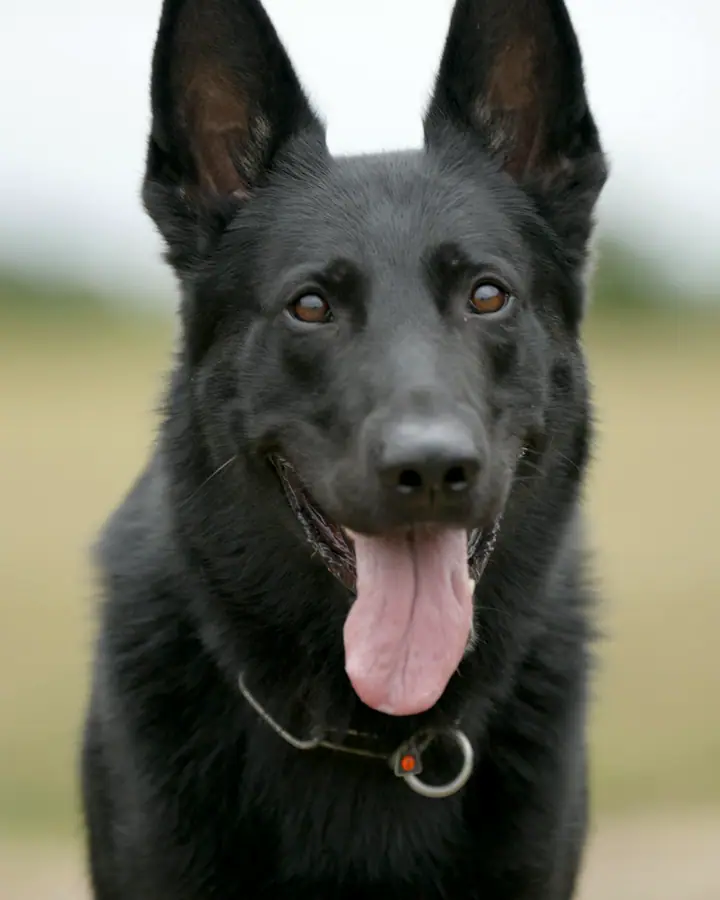
German Shepherds were bred to work alongside a handler all day, think for themselves and guard what's theirs. Every one of those traits is still in your dog. The intelligence is real: they learn fast, which means they learn bad habits as fast as good ones. The watchfulness is real: they notice everything and decide whether it's a threat. And the bond is real: a Shepherd attaches to its family and can be suspicious of everyone else.
That's a brilliant dog if you give it structure. It's a difficult dog if you don't.
The puppy stage: eight weeks to six months
This is where you win or lose. A German Shepherd puppy needs three things in the first few months:
Socialisation done properly. Not throwing the puppy at every dog and person. Calm, positive exposure to the world: traffic, children, people in hats, other dogs that are polite, the car, the vet. The goal is a puppy that's seen it all and found it boring. A Shepherd that misses this becomes a dog that treats everything new as suspicious.
Rules from day one. Where they sleep, whether they're allowed on furniture, waiting at doors, not jumping up. A 5kg puppy jumping up is cute. A 40kg adolescent doing it is a problem.
The basics taught with reward. Sit, down, place, heel, recall. Shepherds love to learn and food and toys work beautifully. There is no reason to be rough with a Shepherd puppy and every reason not to.
I start puppies at eight weeks, in your home before vaccinations or at my training field at Roxwell, west of Chelmsford, once they're vaccinated. Read more about puppy training.
Adolescence: where it goes wrong
Somewhere between six and eighteen months the lovely puppy becomes a teenager. The hormones arrive, the confidence arrives, and the recall and manners disappear. In a German Shepherd this often looks like:
- Lead pulling. A Shepherd that pulls is a Shepherd that's taking you for a walk. At 35 to 45kg it's dangerous, and it's the most common reason owners get in touch.
- Barking and lunging at other dogs. Usually frustration or fear dressed up as bravado. Often made worse by owners who tighten the lead and get tense as a dog approaches.
- Guarding the house, the car, the garden. Barking at the window, at the door, at anyone who walks past. The breed's guarding instinct with no off switch.
- Ignoring you. Not stubbornness. A dog that's decided its own judgement is better than yours.
None of this is the dog being bad. It's the dog being a German Shepherd without enough guidance. The fix is consistent leadership, which doesn't mean dominance or force. It means clear rules, good timing and the dog learning that doing what you ask is reliably worth it.
How I train German Shepherds
Engagement first. Before I ask a Shepherd for anything, I want them looking at me and wanting to work. Food, toys, play: whatever switches that dog on. A Shepherd that wants to work with you is easy. A Shepherd that's being made to is not.
Structure every day. Short sessions, several times a day, on heel, place, stay and recall. Shepherds thrive on this. Most of the "problem" Shepherds I meet are bored.
Real-world proofing. Heel in a quiet field means nothing. Heel past a barking dog on a pavement in Basildon, or through Saturday crowds in Chelmsford, is the goal. We go to those places.
Calm around other dogs. For a reactive Shepherd I work at a distance where the dog can think, pair other dogs with good things and gradually close the gap. For social skills, time with other dogs under supervision at my Big Dog Club day training does more than any amount of lead walking.
An off switch. A Shepherd needs to learn to settle. Place training, calm time in the house, a dog that can lie down and do nothing while the family lives around it.
1-2-1 training if you want to learn alongside your dog and have the time to practise. The initial 1.5 hour session is £160 at the training field, or £190 at your home, with ongoing hours at £100 at the field, £120 at home. Most adolescent Shepherd problems respond well to this. See 1-2-1 training.
Residential training if the problems have got on top of you, the dog is too strong to manage while you learn, or you want a reset. Most dogs stay around three weeks; for puppies and behaviour problems we suggest four. We agree the length with you when Alex has met your dog. The Standard Package is £850p/w with 1 Update Per Week, and the VIP Package is £1250p/w with 3 Updates Per Week. You deal with me directly, there's a handover on collection day and I always suggest continuation training afterwards. See residential dog training.
A 1-2-1 behaviour session if your Shepherd has bitten, is guarding seriously or is frightened of people. £160 for 1.5 hours at our Chelmsford field, or £190 at your home, and I'll tell you honestly what's realistic.
Day training at the Big Dog Club suits working owners whose Shepherd needs exercise, structure and company during the week. From £90/day.
German Shepherds attract trainers who think the answer to a strong dog is a stronger hand. It isn't. Harsh corrections make a confident Shepherd more defiant and a nervous one more dangerous. Research on confrontational training found aggressive responses in a quarter or more of the dogs it was used on. I train to a world championship standard with reward and clear communication. Your family pet doesn't need anything rougher.
Questions owners ask
At what age should German Shepherd training start?
Eight weeks, the day the puppy comes home. The first four months are when socialisation and rules set the adult dog. If you've got an adolescent or an adult with problems, it's not too late; it just takes more work.
Are German Shepherds hard to train?
No, they're one of the easiest breeds to teach. The difficulty is that they're big, strong and quick to learn the wrong things if nobody is teaching the right ones. Consistency is the whole game.
Can you train a German Shepherd that barks at everyone?
Yes, in most cases. It depends on whether it's fear, frustration or guarding, how long it's been going on and how committed you are to the follow-up. I'll give you an clear view after I've seen the dog. Tell Alex about your dog in the form. Tell me how old your Shepherd is and what they're doing, and I'll tell you where to start. I work with owners across Essex, including Brentwood, Chelmsford, Basildon, Colchester and Southend, or send an enquiry.
Google review
We had our first session with Alex last week and couldn't be more happy! We have a very excitable German Shepherd who was extremely reactive to other dogs, making dog walks very stressful. …
Read the full review
We had our first session with Alex last week and couldn't be more happy! We have a very excitable German Shepherd who was extremely reactive to other dogs, making dog walks very stressful. Working with Alex, we started to see immediate improvement in her and we made huge progress in overcoming her reactivity in the first session alone. Looking forward to more training sessions with Alex and would definitely recommend!
Sources
Related
Last updated . This post is general advice, not a diagnosis. If your dog may be unwell or in pain, please see your vet.